
How we build a street out of pixels
Poppy Seed Street is a digital production. Here’s how an idea becomes an episode, from the kitchen-table writers’ room to the camera that flies up into the clouds.
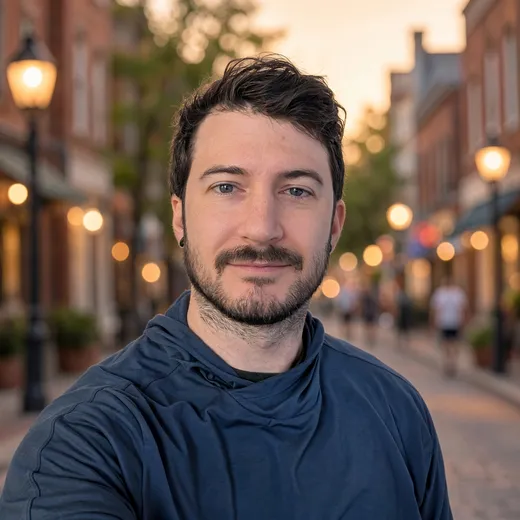 Ty
People keep asking me where Poppy Seed Street is. The honest answer is that it’s in Juniper Falls, Pennsylvania, and it’s also inside a bunch of computers. This is a digital show, and that’s one of my favorite things about it. Here’s how an episode gets made, start to finish.
1. The question
Every episode starts with a question, and most of them come from Flufflepuff’s Wonder Jar. Before anybody writes a word, we have to be sure the question is:
- Real. Something a curious person might actually wonder about.
- Big enough that the answer is surprising.
- Small enough to explore in one episode without anyone’s brain melting.
“How do computers work?” was too big. “How does a computer know what to do?” was just right.
2. The kitchen-table writers’ room
Our writers’ room is a kitchen table, a whiteboard, and a bowl of chocolate raisins (my contribution). We map out the story first: what does each neighbor want in this episode, and what gets in their way? Then we figure out where the learning lives. The rule is that the lesson has to be part of the story, never a pause in it. If Jean-Baptiste is learning about circuits, it’s because the bakery’s sign went dark and he wants to fix it.
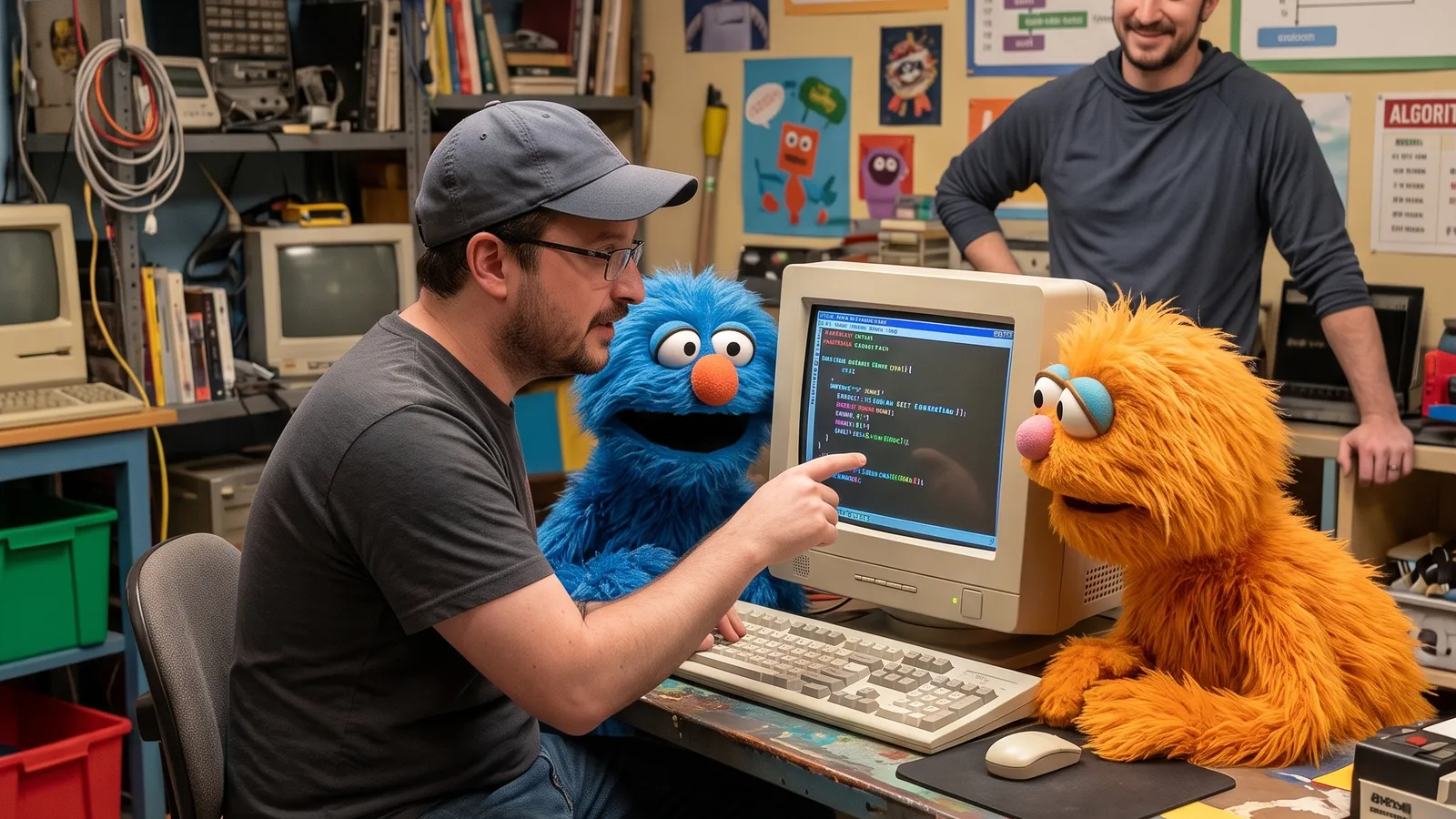
Then we check every fact. Then we check it again. Then Peanut checks it, because he will absolutely point out if we got something wrong.
3. Building the world
Every set on the show, from the Fix-It & Byte to the rock walls of the Lehigh Gorge, is built digitally. Same for every puppet. We spend a ridiculous amount of time on small things: how Flufflepuff’s fur catches the light, how many bricks are in the bakery wall (Pumpkin says 2,316, and so that’s how many there are), whether Peanut’s lamppost is tall enough for him to see the whole street.
Small details are how a made-up place starts to feel real. If you want to visit your neighbors, they need to feel like neighbors.
4. Lights, camera, (digital) action
Once the world exists, we “film” it. We pick camera angles, plan shots, and stage the scenes like a regular TV crew, except our camera can go places a real camera can’t.
You’ve already seen it, actually. When you clicked from the street to this blog, the camera tilted up past the cherry trees and over the rooftops into the sky. That shot was made the same way the show’s shots are, and it’s become a bit of a signature for us. The sky above Poppy Seed Street is where we keep the stories. Head back to the street and the camera comes right back down.
5. Sound and music
A show isn’t finished until it sounds right. That means voices, footsteps on cobblestones, the creak of the bakery door, and music. We have our very own theme song, and you can turn it on with the music button in the top corner of the site.
6. The edit
Finally everything comes together in the edit: picture, sound, music, and a lot of trimming. A good educational episode is like a good hike. It should never feel longer than it is, and you should finish it a little out of breath and wanting to go again.
Why digital?
Because it lets a very small team make a very big world. We can visit rocks that formed 300 million years ago in the morning and zoom inside a dividing cell in the afternoon. And because so much of what we teach (computers, code, the internet) lives in that same digital world, it feels right to make the show there too.
Next time, I’ll tell you about the time we took the whole gang into the woods. Bring a magnifying glass.
Ty