A table with room for everybody
English, Japanese, Ukrainian, French and Blue Jay. Why our neighbors speak so many languages, and what we’re learning from the United Nations for Episode 9.
 Todd
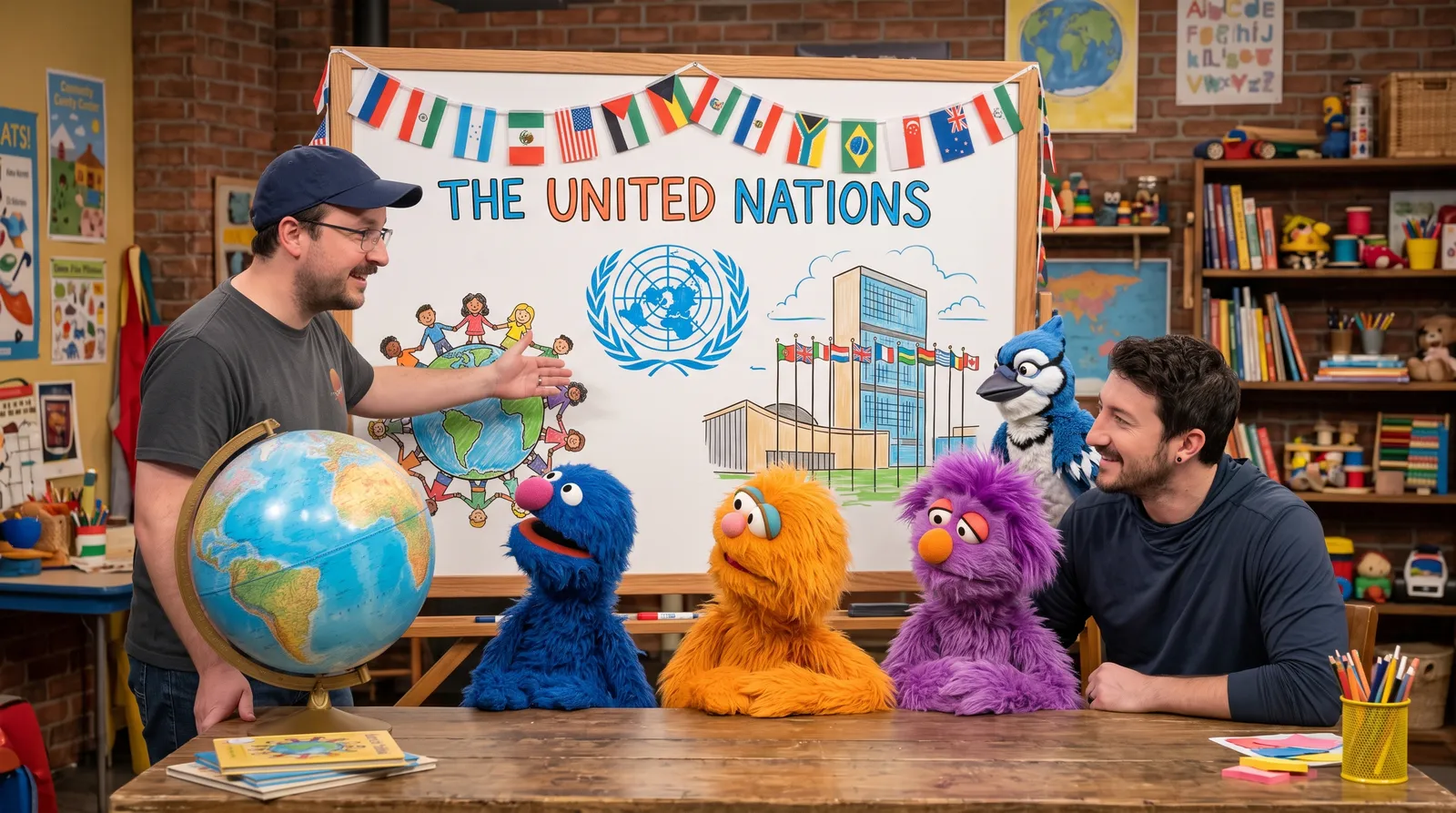
If you spend a day on Poppy Seed Street, you’ll hear a lot more than English.
You’ll hear me say itadakimasu before lunch. You’ll hear Ty thank the mail carrier with a warm dyakuyu. You’ll hear Jean-Baptiste count un, deux, trois before he lifts something heavy. And you’ll hear Peanut do a hawk impression, which he insists counts as a language.
This mix wasn’t an accident. It’s one of the things we’re proudest of, and it’s the heart of Episode 9, “A Table for Everyone.”
Our neighbors, our languages
| Neighbor | Speaks | Favorite word to teach |
|---|---|---|
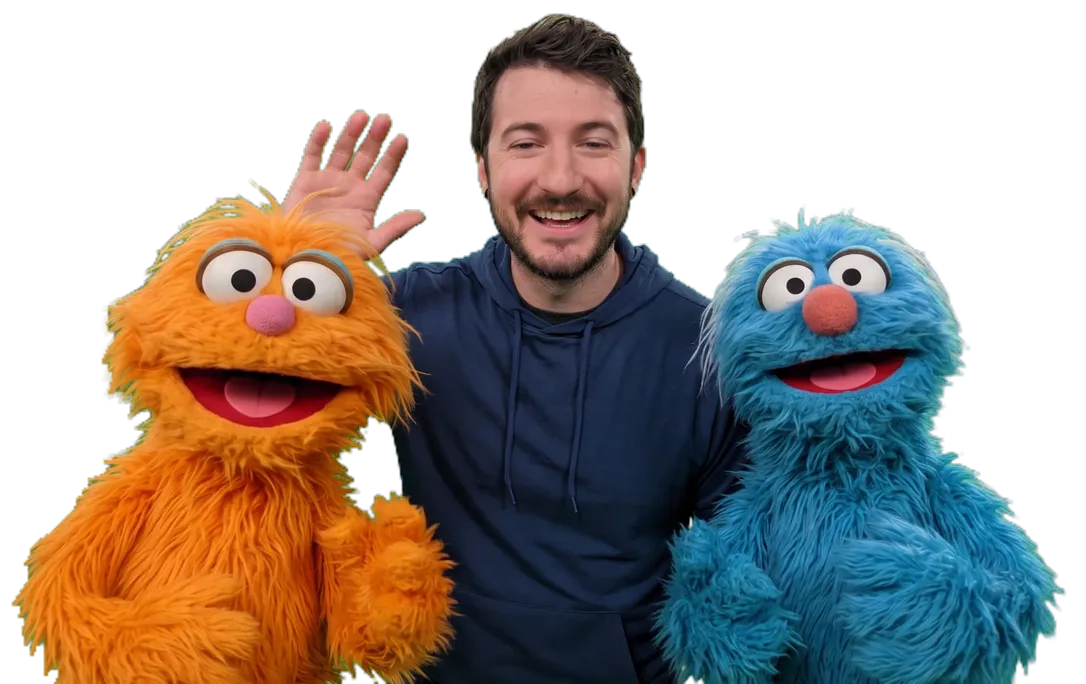
| Todd | English, Japanese | いただきます (itadakimasu): said before a meal, a little like “thank you for this food” |
| Ty | English, Ukrainian | дякую (dyakuyu): “thank you” |
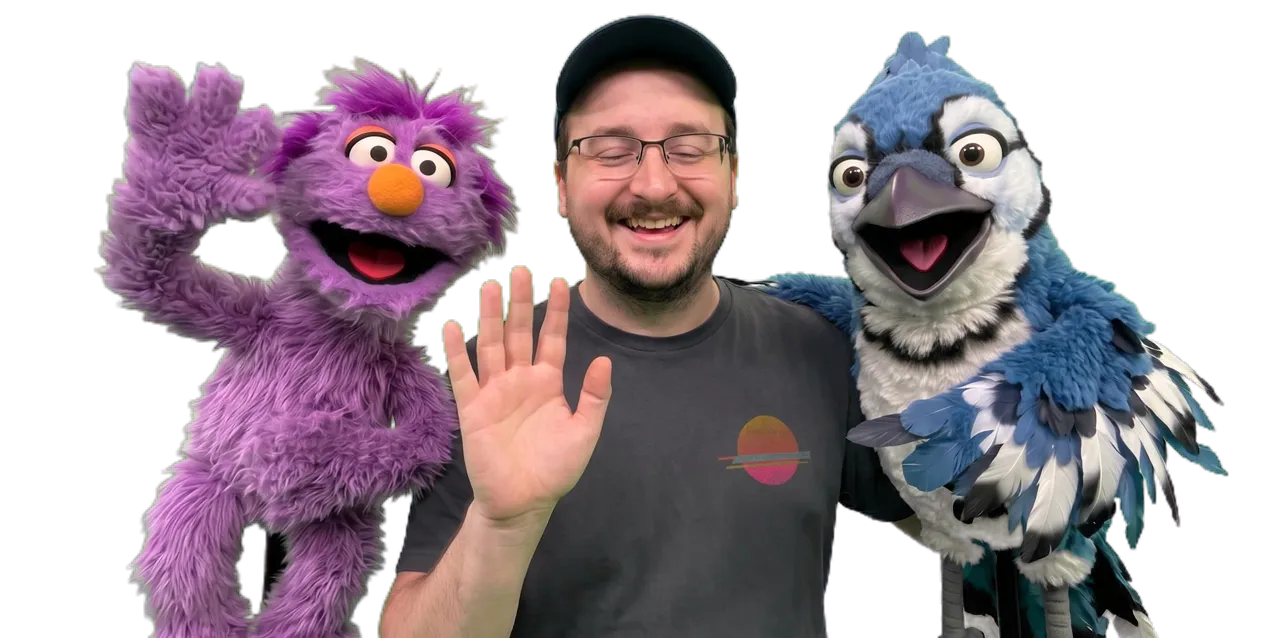
| Jean-Baptiste | French, English | débrouillard: someone who figures things out on their own |
| Peanut | English, Blue Jay | (a hawk call; you’ll have to watch the show) |
| Pumpkin | English, Numbers | “one more,” as in “just one more step” |
| Flufflepuff | English, a little Kazoo | “why?” |
We think hearing other languages early and often, and from friends, makes the world feel bigger and friendlier at the same time. Every language is a different way of seeing things. Japanese has a word, komorebi (木漏れ日), for sunlight filtering through leaves. Ty taught us that Ukrainian is full of affectionate “little” versions of words, so a sunflower, sonyashnyk, can become a tiny, tender sonyashnychok. You can’t un-learn a word like that. It changes how you look at a sunflower.
The episode: the empty lot
In “A Table for Everyone,” the empty lot at the end of Poppy Seed Street finally becomes available, and everybody has a different idea for it. Pumpkin wants a vegetable garden. Jean-Baptiste wants a fort. Flufflepuff wants a stage. Peanut wants “a very tall pole, for news.”
Things get loud. So Ty and I roll out the big globe and tell everyone about a place where people from all over the world come to solve problems together: the United Nations.
What we’re teaching about the UN
We’re keeping it simple and true:
- The United Nations was founded in 1945, after World War II, by countries that wanted to work out disagreements by talking instead of fighting.
- Today it has 193 member countries. That’s almost every country on Earth, around one very big table.
- It has six official languages: Arabic, Chinese, English, French, Russian and Spanish. Interpreters translate speeches live so everyone can understand each other.
- Its work includes helping children get food, medicine and schooling, protecting world heritage sites, and responding when disasters strike.
The big idea isn’t the details, though. It’s that people who are very different, who speak different languages and want different things, can still sit at the same table, listen, and find something that works for everybody.
How the street decides
We won’t spoil the ending. But I’ll tell you that the neighbors make a little flag for each idea, everybody gets a turn to speak (Peanut’s turn is very long), and someone very small comes up with an idea that has a piece of everybody’s in it.
We’re still writing this one, and it’s already one of my favorites. If you have a word in your language you think the whole street should learn, we’d love to hear it. Flufflepuff has a jar for that.
Todd